
Capability
Boulder · New Mexico · United Kingdom
Capabilities / Mag ISR
Mag ISR
Magnetic intelligence, surveillance and reconnaissance — detecting what other sensors cannot see.
The problem
Why this is hard
Cameras and radar read surfaces. A great deal of what matters is not on the surface: it is buried, submerged, inside a hull or behind a wall. Ferrous mass distorts the background magnetic field around it, and that distortion travels through soil, water and structure without caring whether there is a line of sight. The reason magnetic sensing is not everywhere already is that the instruments able to read a small distortion against a noisy background have been large, power-hungry and delicate.
The answer
What the sensor does
An atomic magnetometer reads the field by asking atoms what they are experiencing, which is what makes it stable enough to trust over a long traverse without constant recalibration. Making one at chip scale turns a survey instrument into a payload that can be carried, mounted in numbers, or left in place. A single reading is rarely interesting; a line of readings across ground is, because an anomaly shows up as a shape in the record rather than a number on a display.
Applications
Example applications
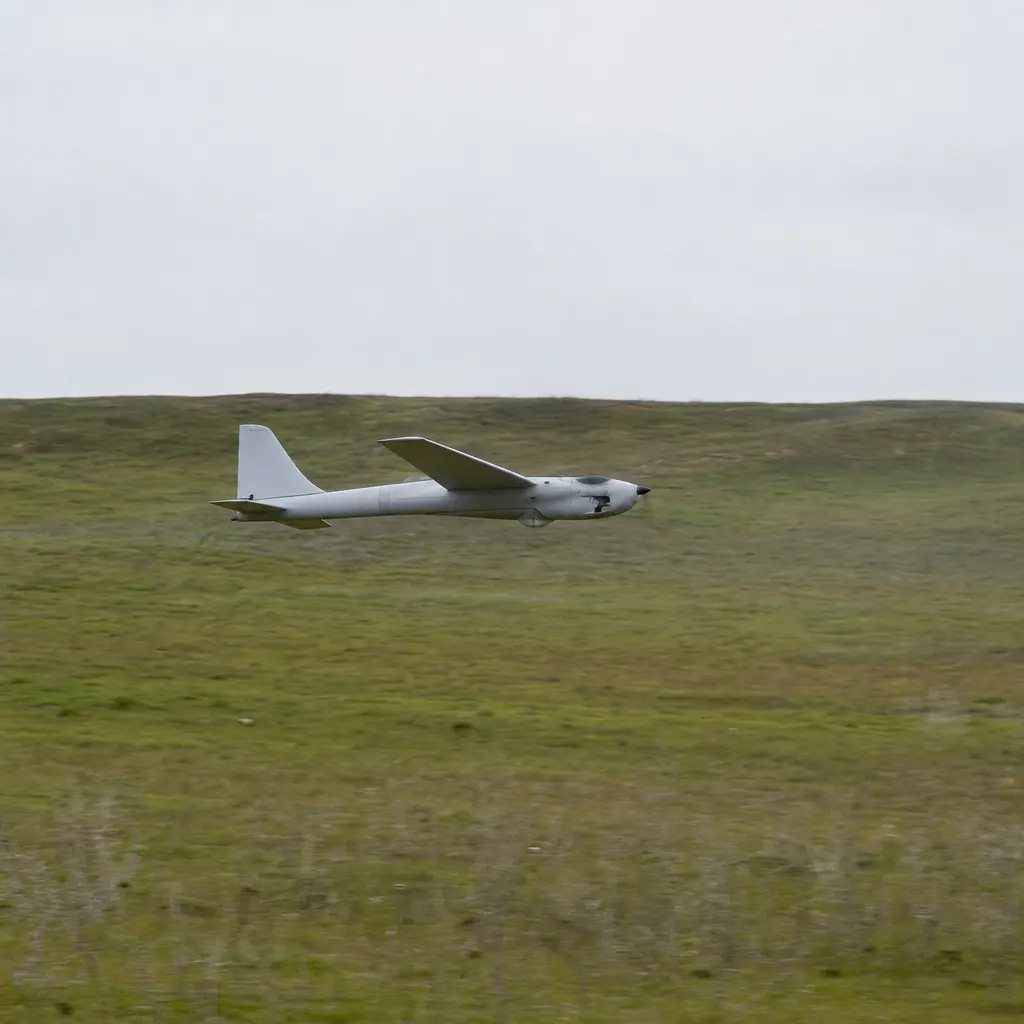
Defense
Detection and classification of concealed ferrous mass where optical and radio sensing have no path to it.